Exercises for stiff joints
Getting out of a chair takes two attempts. Your knees creak on the stairs, your fingers feel thick and clumsy first thing, and turning your head to reverse the car is harder than it used to be. Moving may be the last thing you feel like doing — yet gentle, regular movement is one of the most reliable ways to loosen stiff joints and keep them working.
First: loosening up and staying mobile are two different jobs
Stiffness responds quickly to movement. A few minutes of gentle exercises, taking each joint slowly through its comfortable range, is often enough to make the rest of the morning feel easier. That is the short-term job, and the 10-minute routine below is built for it.
The longer-term job — joints that feel less stiff week after week — belongs to stronger muscles, regular low-impact activity and good balance. Both are below, in that order, with clear safety rules first.
If you want to understand where joint pain comes from, start with how to relieve joint pain naturally. If mornings are the hardest part, see why joints are stiff in the morning.
- Warm up first and move slowly, never bouncing.
- Little and often beats one long, hard session.
- Mild discomfort is fine; sharp pain means ease back.
- Build up gradually and let the next day guide you.
Why movement helps stiff joints
It can feel as if a stiff joint needs protecting. In fact, it usually needs the opposite. Joints are built to move, and several things happen when they do.
First, lubrication. Each of your main joints sits inside a capsule filled with synovial fluid, a slippery liquid that lets the cartilage surfaces glide over each other. Cartilage has no blood supply of its own; it relies on movement and gentle loading to circulate that fluid and bring it nutrients. When a joint stays still for hours — overnight, on a long drive or during an evening on the sofa — the fluid circulates less and the joint feels stiff until you get going again.
Second, support. The muscles around a joint act as shock absorbers and stabilisers. Strong thigh muscles take load off the knees; strong hip and core muscles help the hips and lower back. When we move less because a joint aches, those muscles weaken, the joint loses support and it aches more easily. It is a cycle, and it runs in both directions: regular exercise rebuilds that support.
Third, range. Soft tissues around a joint that is rarely moved through its full range gradually shorten and tighten. Gentle stretching keeps them supple, so everyday movements such as reaching, kneeling and turning stay possible.
That is why UK guidelines on osteoarthritis from NICE (NG226) put therapeutic exercise at the core of care for everyone with the condition, alongside information and weight management, rather than relying on painkillers alone. You are not trying to force a stiff joint to move. You are giving it the movement, support and range it depends on.
Safety first: how to exercise without overdoing it
Most people with stiff or arthritic joints can exercise safely. A few simple rules make the difference between a routine that helps and one that leaves you sore and discouraged.
Before you start
- Warm up for a few minutes — marching on the spot, a short walk around the house or a warm shower beforehand all work.
- Wear comfortable clothes and supportive, non-slip shoes, and clear a little space around you.
- Use a sturdy chair without wheels for seated exercises, and something stable to hold for standing ones.
- Move slowly and smoothly, breathe normally and never bounce into a stretch.
- If you have a heart or breathing condition, have had a recent joint operation or are unsure what is safe, ask your doctor or physiotherapist first.
Pain rules of thumb
- Mild discomfort or a gentle stretching feeling during exercise is normal and not a sign of harm.
- Aching that settles within a couple of hours means the level is about right.
- Sharp or stabbing pain during a movement means make it smaller, slower or skip it today.
- Pain that is much worse the next day means ease back next time — fewer repetitions or a smaller range — rather than stopping altogether.
Stop and seek help if…
Stop exercising straight away and get medical help if you have chest pain or tightness, feel dizzy, faint or unusually breathless, or notice a joint that has become hot, red and swollen, especially with a fever. For chest pain, severe breathlessness or collapse, call emergency services (112 in Europe, 999 in the UK).
A 10-minute daily mobility routine
Ten joint mobility exercises, in order, from your feet to your spine. You need a sturdy chair and a little wall space. Do them once a day — many people find the morning works best — and stay within a comfortable range.
Warm up: march on the spot
Holding the back of a sturdy chair if you need to, march gently on the spot for one to two minutes, swinging your arms. You should feel a little warmer and slightly looser before you start the rest. Time: 1–2 minutes.
Ankle pumps and circles
Sit tall and lift one foot slightly off the floor. Point your toes away from you, then pull them back towards you. Next, circle the foot slowly, first one way and then the other. Repeat with the other foot. Reps: 10 pumps, then 10 circles each way, each foot.
Seated knee extensions
Sit well back in the chair with your feet flat. Slowly straighten one knee until the leg is out in front of you, tighten the thigh muscle, hold, then lower slowly. For a little more challenge, keep the leg straight and lift it a few centimetres (a straight-leg raise). Reps: 10 each leg, holding 3–5 seconds.
Heel slides
Sitting in the chair or lying on your back on the bed, slide one heel slowly towards you so that the knee bends as far as is comfortable. Hold briefly, then slide it back out until the leg is straight. This is one of the gentlest stretches for stiff knees. Reps: 10 each leg, holding 2 seconds.
Sit-to-stand
Sit near the front of the chair with your feet hip-width apart and slightly behind your knees. Lean forward a little and stand up, using your hands only if you need to, then sit back down slowly and with control rather than dropping. Reps: 5–10.
Standing hip side-raise
Stand tall behind the chair, holding its back. Keeping your toes pointing forward and your body upright, lift one leg out to the side, then lower it slowly. Do not lean over to make the movement bigger — a small, controlled lift is enough. Reps: 10 each side.
Shoulder rolls and wall slides
Roll your shoulders slowly backwards, then forwards. Then stand facing a wall, rest your hands on it at shoulder height and slide them up as high as is comfortable before sliding them back down. Reps: 10 rolls each way, then 8–10 wall slides.
Neck turns and tilts
Sit tall with your shoulders relaxed. Slowly turn your head to look over one shoulder, hold, then turn to the other side. Then tilt one ear gently towards the same shoulder and repeat on the other side. Never force or circle the neck quickly. Reps: 5 each way, holding 3 seconds.
Wrist circles and finger tendon glides
Circle your wrists slowly in both directions. Then, starting with your fingers straight, bend them into a hook (fingertips touching the top of your palm), open, make a flat fist (fingers straight, bent at the knuckles), open, and finally make a gentle full fist. Open fully between each shape. Reps: 10 circles each way, then 5 rounds of glides.
Seated spinal twist
Sit tall with both feet flat and cross your arms over your chest. Turn your upper body gently to one side, keeping your hips facing forward, hold while breathing normally, then return to the centre and turn the other way. If you are comfortable on hands and knees, cat-cow — slowly arching and rounding your back — is a good alternative. Reps: 3–5 each side, holding 10–15 seconds.
If a movement hurts
Make it smaller, slower or skip it for today, and carry on with the rest. If the same exercise is painful every time, or a joint locks, catches or gives way, ask a physiotherapist to check your technique and suggest an alternative.
Strength exercises, two or more days a week
Mobility keeps joints moving; strength keeps them supported. Aim for strength exercises on at least two days a week. Start with one or two sets of 8 to 12 slow repetitions, and add a set or a firmer band only once that feels easy.
Sit-to-stand and step-ups
Progress your sit-to-stands by folding your arms across your chest or using a slightly lower chair. Add step-ups onto the bottom stair, holding the banister: up with one leg, down with the same leg, 8 to 10 times each side.
Bridges and banded side-steps
Lying on your back with knees bent, squeeze your buttocks and lift your hips until your body forms a straight line, hold for three seconds and lower slowly. With a resistance band around your thighs, take small steps sideways along a worktop.
Band rows and wall push-ups
Loop a resistance band around a door handle or your feet and pull the ends towards your waist, squeezing your shoulder blades together. Wall push-ups strengthen the shoulders, elbows and wrists without loading them heavily.
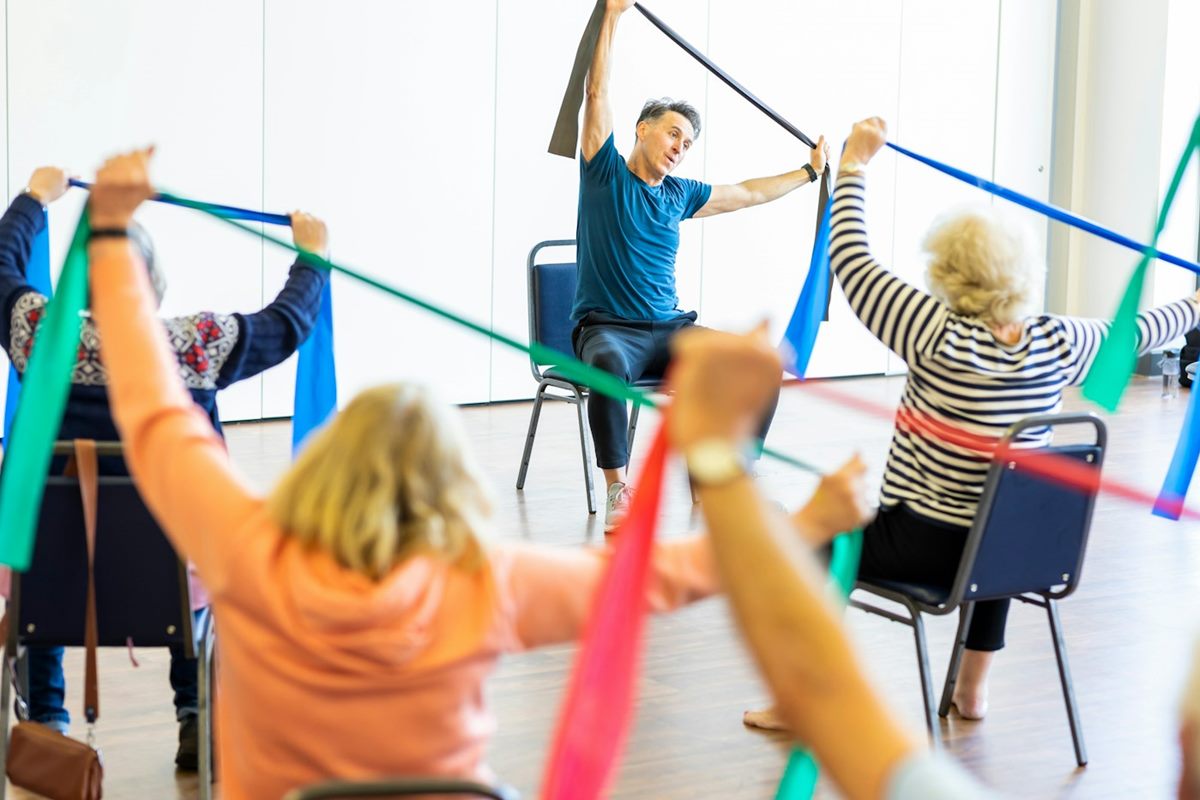
Bands come in colour-coded strengths. Start with the lightest one that still makes the last two or three repetitions feel like effort.
Take about two seconds to lift or pull and two to three seconds to return. Slow, controlled movements work the muscle harder and are kinder to the joint.
Breathe out as you stand, push or pull, and in as you return. Holding your breath raises blood pressure and makes the effort feel harder.
Muscles get stronger in the recovery days afterwards. Leave a day between strength sessions and keep up your daily mobility routine in between.
Low-impact cardio: building up to 150 minutes a week
Activity that raises your heart rate helps joints indirectly but powerfully: it keeps you moving for longer, helps with weight management, which takes load off the knees and hips, and improves sleep and mood. NHS guidance for older adults is to build up to at least 150 minutes of moderate activity a week — for example 30 minutes on five days — or 75 minutes of vigorous activity, and to reduce long periods of sitting. Moderate means you can still talk, but not sing.
- Walking: the easiest place to start. Begin with 10 minutes on flat ground in cushioned, supportive shoes, and add a few minutes each week.
- Swimming and water exercise: warm water supports your body weight and soothes stiff muscles, which suits people with sore hips, knees or back. Many pools run aqua-fit or arthritis-friendly classes.
- Cycling: outdoors or on an exercise bike, cycling moves the knees and hips through a smooth range without impact. Set the saddle high enough that your knee is only slightly bent at the bottom of each pedal stroke.
- Other options: dancing, tai chi, gentle yoga and seated exercise classes all count, and doing something you enjoy makes it far easier to keep going.

If 150 minutes sounds a long way off, that is fine. Any activity is better than none, and short bouts of 10 minutes add up just as well as longer sessions.
Balance exercises: the part most people skip
Stiff ankles, knees and hips change the way you walk, and weaker leg muscles make it harder to catch yourself if you trip. Balance training is one of the best ways to stay steady and confident on your feet, and NHS guidance recommends it on at least two days a week for older adults. Always do these next to a worktop or sturdy chair you can hold.
- Feet-together stand: stand with your feet together, holding the worktop lightly, for 10 to 30 seconds. As it gets easier, hold on with just one finger, then not at all.
- Heel-to-toe stand: place one foot directly in front of the other, as if on a tightrope, and hold for 10 to 30 seconds. Swap feet.
- Single-leg stand: lift one foot just off the floor and hold for up to 10 seconds, then swap. Try it while brushing your teeth.
- Heel raises: rise slowly onto your toes, hold for two seconds and lower slowly, 10 times. This strengthens the calves and ankles too.
- Heel-to-toe walk: walk 10 steps along the worktop, placing the heel of one foot directly in front of the toes of the other.
How to build the habit and progress
Exercise for stiff joints works through repetition, not intensity. Give a new routine six to eight weeks before you judge it, and tie it to moments you already have, such as the kettle boiling or the news coming on.
- Every day: the 10-minute mobility routine, ideally in the morning after a warm shower.
- Every 30 to 60 minutes of sitting: stand up, walk around and do a few ankle pumps and shoulder rolls.
- Two or three days a week: strength exercises with your body weight or a resistance band, with a rest day in between.
- Most days: walking, swimming or cycling, building towards 150 minutes a week.
- Two days a week: five minutes of balance exercises, beside a worktop.
- Once a week: note one thing that has become easier — the stairs, a jar lid, a longer walk.
To progress, change one thing at a time: a couple more repetitions, a slightly longer hold, a firmer band or five more minutes of walking. If a change leaves you much sorer the next day, step back to the previous level for a week and try again. For the everyday habits that can undo your progress, see our guide to what makes joint pain worse.
Common mistakes to avoid
Skipping the warm-up
Cold, stiff joints and muscles do not like sudden demands. Two minutes of marching on the spot or a warm shower first makes every exercise feel easier.
Doing too much on a good day
A burst of enthusiasm often leads to two sore days afterwards. Keep to your plan on good days and you will have fewer bad ones.
Stopping completely on a bad day
Resting a stiff joint for days lets it stiffen further. On a bad day, do a smaller, gentler version of your routine instead of nothing.
Bouncing or forcing a stretch
Jerky, bouncing movements can strain tissues. Move slowly into a stretch, stop at a comfortable tension and breathe normally while you hold it.
Ignoring a change
A joint that suddenly swells, locks or gives way, or pain that keeps getting worse despite sensible exercise, is not something to push through. Get it checked.
The part that is rarely said out loud
Many people with stiff, aching joints quietly stop moving because they are afraid of making things worse. That fear is understandable, and it is worth questioning.

When a joint hurts, it is natural to assume that the pain is a sign of damage. With long-standing stiffness and osteoarthritis, that is usually not the case: hurt does not always mean harm. Stiff joints often ache at the start of activity and then ease as they warm up.
Avoiding movement feels protective, but it gradually weakens the muscles that support the joint and lets it stiffen, so everyday tasks become harder. Gentle, regular exercise reverses that cycle, and the first few weeks are usually the hardest.
Real help exists, too. A physiotherapist can assess how your joints move, build a programme around your goals and show you how to progress safely. Many areas also offer exercise classes for people with arthritis, including in warm-water pools.
And in the meantime: feeling stiff is not a personal failing, and you do not have to simply put up with it.
When to see a physiotherapist or doctor
Most stiffness improves with regular, gentle exercise. Some situations, though, need an assessment rather than a better routine, and a few need one immediately.
Seek help urgently if you…
- have chest pain, or pain spreading to the arm, neck or jaw, during or after exercise,
- feel dizzy, faint or severely breathless,
- notice a joint that is suddenly hot, red and swollen, especially with a fever,
- cannot put weight on a leg or move a joint after a fall or injury.
Arrange an appointment if…
- stiffness has not improved after a few weeks of regular exercise,
- morning stiffness lasts longer than about 30 minutes, or several joints are swollen,
- pain is stopping you from exercising or wakes you at night,
- a joint locks, catches or gives way,
- you have had a joint replacement or surgery and are unsure which exercises are safe.
A physiotherapist will usually watch how you move, check your strength and range and give you a tailored set of exercises, often with clear steps for progressing them. The advice on this page offers general guidance and may support your routine; it does not replace a diagnosis, personalised advice or care from a healthcare professional.
Natural support alongside your exercise routine
Exercise is the foundation. Some people also like to complement their routine with botanical supplements. These may contribute to wellbeing and are easy to fit into a daily habit, but they do not replace movement, a medical assessment or any treatment you have been prescribed.
What about turmeric?
Turmeric (Curcuma longa) is one of the most widely studied botanicals for joint comfort. Its curcuminoids are studied for their role in the body’s normal inflammatory response, and several clinical trials in people with knee osteoarthritis have reported improvements in pain and function. The studies vary in size and quality, so the evidence is promising but not conclusive. Black pepper extract (piperine) is often added because it markedly increases how much curcumin the body absorbs.
If you take prescription medicines, particularly blood thinners, or have gallstones, bile-duct or liver problems, ask a doctor or pharmacist before starting any turmeric supplement. We set out exactly what the research does and does not show on our transparency page.
Movelityn as complementary support for staying mobile
Once your routine is in place, what makes the difference over time is consistency: daily mobility exercises, strength work twice a week, regular walking, swimming or cycling, and a little balance practice.
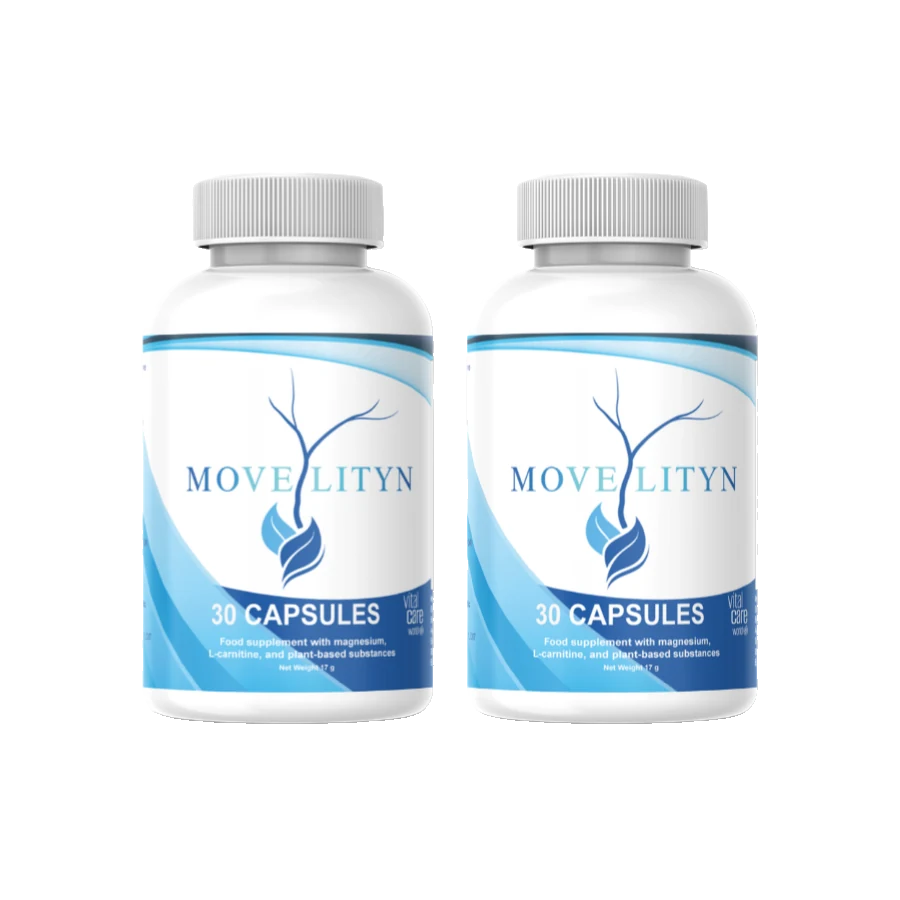
Movelityn is a natural food supplement for people who want to support comfortable, flexible movement alongside that routine. One capsule twice a day, ideally 20 to 30 minutes before a meal with a glass of water. It is not a treatment for arthritis or any other condition and not a substitute for medical assessment.
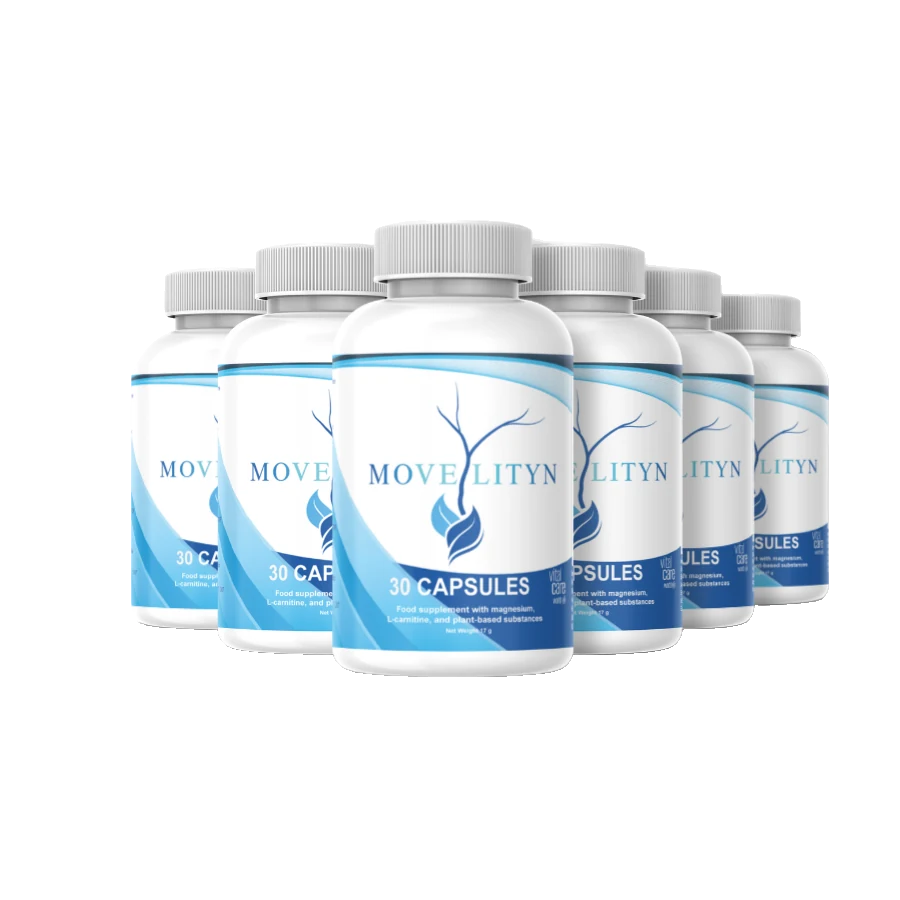
- Turmeric rhizome (1,200 mg) – Curcuma longa, the golden spice used in traditional kitchens for centuries
- Standardised turmeric extract (100 mg) – 95% curcuminoids, providing 96.8 mg of curcumin per daily serving
- BioPerine® black pepper extract (10 mg) – standardised to 95% piperine, included because piperine increases how well curcumin is absorbed
- 60 capsules per bottle – a full month’s supply at two capsules a day
Every ingredient and every amount is printed on the label. The complete label, and the research behind each ingredient, is on the Movelityn transparency page.
Frequently asked questions about exercises for stiff joints
What is the best exercise for joint stiffness?
There is no single best exercise. Stiff joints respond best to a mix: gentle mobility exercises that take each joint through its comfortable range every day, strength exercises for the muscles that support it on at least two days a week, and regular low-impact activity such as walking, swimming or cycling. The best exercise for joint stiffness is the one you enjoy enough to keep doing.
How often should I do joint mobility exercises?
Daily, ideally. Mobility exercises are gentle enough to do every day, and many people find two short sessions work best: one in the morning to ease stiffness and one in the evening or after sitting for a long time. Ten minutes is plenty to start with.
Is it normal for joints to hurt when I exercise?
Some mild discomfort during or after exercise is common when joints are stiff or arthritic, and it is not usually a sign of harm. As a rule of thumb, discomfort that settles within a couple of hours is fine. Sharp or stabbing pain, or pain that is much worse the next day, means you should ease back by doing fewer repetitions or a smaller movement, not stop altogether.
What are good stretches for stiff knees?
Gentle options include seated knee extensions, heel slides, straight-leg raises and a calf stretch against a wall. Move slowly, hold each position for a few seconds and never bounce. Strengthening the thigh muscles with sit-to-stands or step-ups helps the knees as much as stretching does.
Is swimming or walking better for arthritis?
Both are good, and they work slightly differently. Swimming and exercise in warm water take weight off the joints, which suits people whose hips or knees are very sore. Walking is weight-bearing, which helps keep bones strong, and it is easy to fit into everyday life. Many people do some of each, along with cycling for variety.
Should I exercise during an arthritis flare-up?
During a flare-up, reduce the intensity rather than stopping completely. Gentle range-of-motion movements, done slowly and within comfort, help stop the joint stiffening further, while strength work and longer activity can wait until things settle. If a joint is hot, red and very swollen, especially with a fever, rest it and get medical advice the same day.
Can exercise make arthritis worse?
Appropriate, gradually increased exercise does not wear joints out faster. UK guidelines for osteoarthritis recommend exercise as a core part of care because it tends to reduce pain and improve function. Problems usually come from doing too much too soon, so build up slowly and let the next-day response guide you.
When should I see a physiotherapist about stiff joints?
See a physiotherapist or doctor if stiffness has not improved after a few weeks of regular exercise, if pain is stopping you from exercising, if a joint locks or gives way, or if you are unsure which exercises are safe for you. Get medical help the same day for a hot, swollen joint, chest pain or dizziness during exercise.
Discover Movelityn
as daily support.
Movelityn can complement a mindful routine around regular movement, comfortable joints and everyday wellbeing. If stiffness or pain is new, severe or clearly worsening, advice from a healthcare professional remains essential.
Learn more about MovelitynMovelityn is a food supplement, not a medicine. Complementary support is useful when viewed realistically: as one part of a routine, not as a promise.
Wondering whether Movelityn is legitimate? Read our transparency article: Is Movelityn a scam or legit?